
‘Let’s build our Nation along with developing its People’ is the mission statement of the BOSAT, a monthly publication in English of Siri Vajiraramaya temple that is being revived at the request of Most Venerable Tirikunamale Ananda Mahanayaka Thera. It is derived from the oft-quoted utterance of Most Venerable Madihe Paññāsīha Mahanayaka Thera, namely, ‘Let’s build the nation along with the development of man.’ මිනිහාත් හදා ගනිමින් රටත් හදා ගනිමු.’
The earlier BOSAT publication did not have any specific target group but it catered for the English reading public in general. It was the need at that time. Unlike in the nineties, many publications are now available in English written by scholars local and foreign. However, the general notion, whether true or not, is that the present generation is not book-friendly, but use very much the smartphone that is in their hands.
There is a term that has been coined to refer to the youth of today, which is Gen Z or Generation Z. A recent feature article written by Prof. N. Abeysekera of the Department of Management Studies of the Open University of Sri Lanka that appeared in the Island Newspaper of November 6th defines Gen. Z as those “born between 1997 and 2012”. Their special attributes were described as follows:
“Generation Z represents the first truly ‘digital native” generation – raised not just with the internet, but immersed in it. Their lives revolve around the digital ecosystems: Tik Tok sets cultural trends, Instagram fuels discovery, YouTube delivers learning, and WhatsApp sustains peer communication. This constant feed-driven engagement shapes not only how they consume content but also how they think, act, and spend. Tech-savvy and socially aware, Gen Z holds brands to a higher standard. For them, authenticity, transparency and accountability – especially on environmental and ethical issues – aren’t marketing tools; they are baseline expectations.”
Those in the Gen. Z age group are scattered among government schools, dhamma schools, international schools, universities, the young work force and society in general. Accordingly, the aim of the revived BOSAT will be to reach out to those in the age group 15-30 with special emphasis on those who are between 18 and 26. The over-riding factor in this regard is that the youth of today will be the leaders of tomorrow.
Most challenging will be to reach them and to ensure that their interest is maintained continuously. The future BOSAT that will be a monthly publication will not be a printed but be an electronic version only. However, it will be formatted in such a way that recipients could make copies, if they wish. To assist in this, the publication will reach the registered readers two days prior to a Full-Moon Day. Furthermore, it will be multi-channeled allowing it to go viral without copyright but requesting to give due acknowledgement when quoted. The contents will be relevant to the target age group and presented in an appealing manner, with design and layout that would evoke interest. There will be provisions for feedback and the wish is for everyone, especially the youth, to partner in this nation building venture.
Sabbe sattā bhavantu sukhitattā – May all beings have happy minds!!!
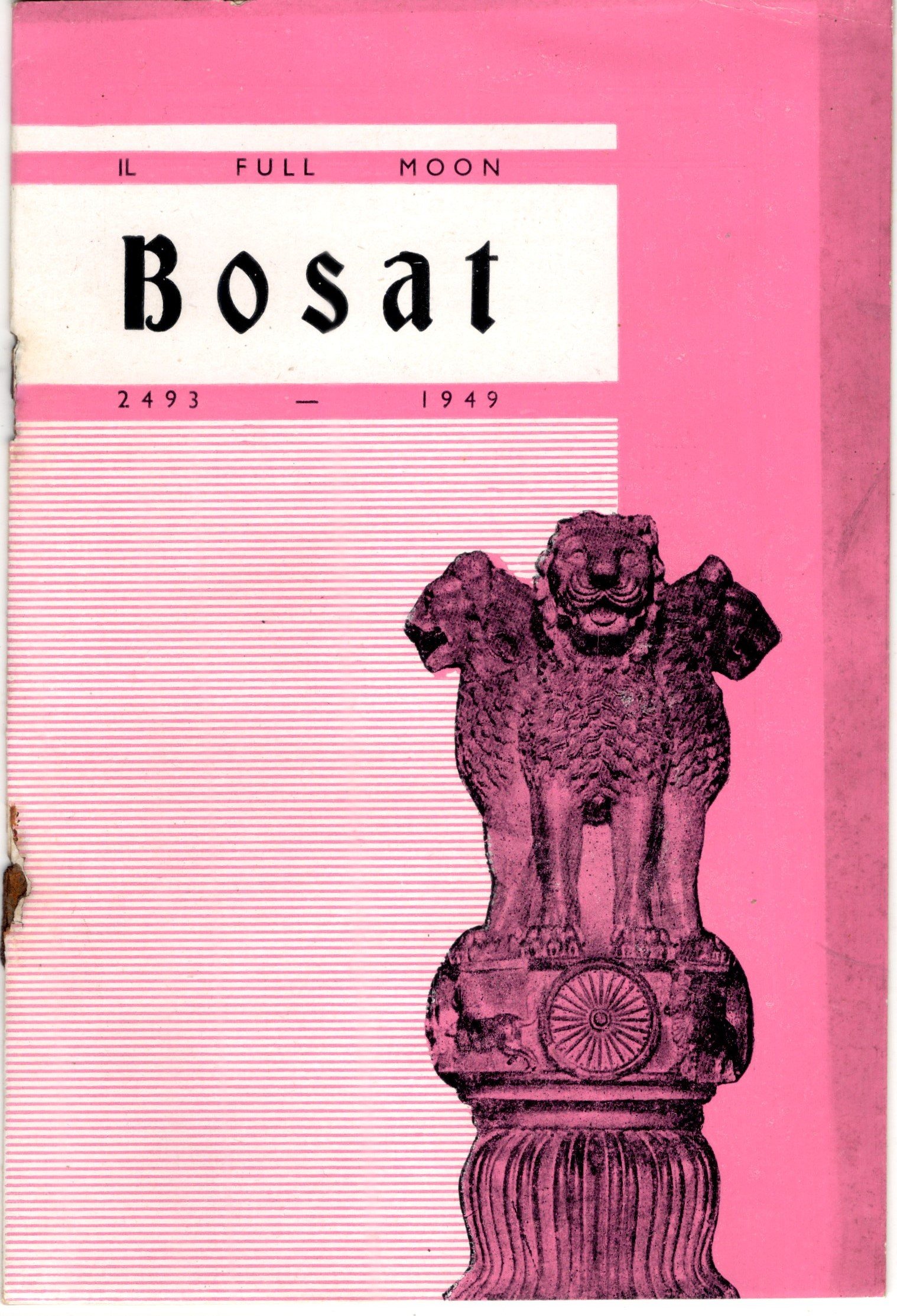
A Storied History
First published in 1936 by Siri Vajirarama Temple, BOSAT was a beacon of Dhamma in English. Pioneered by Venerable Pamburana Metteyya Thera, it served the community for decades. Today, under the guidance of Most Ven. Tirikunamale Ananda Mahanayaka Thera, we relaunch this treasure at bosat.vajirarama.lk.